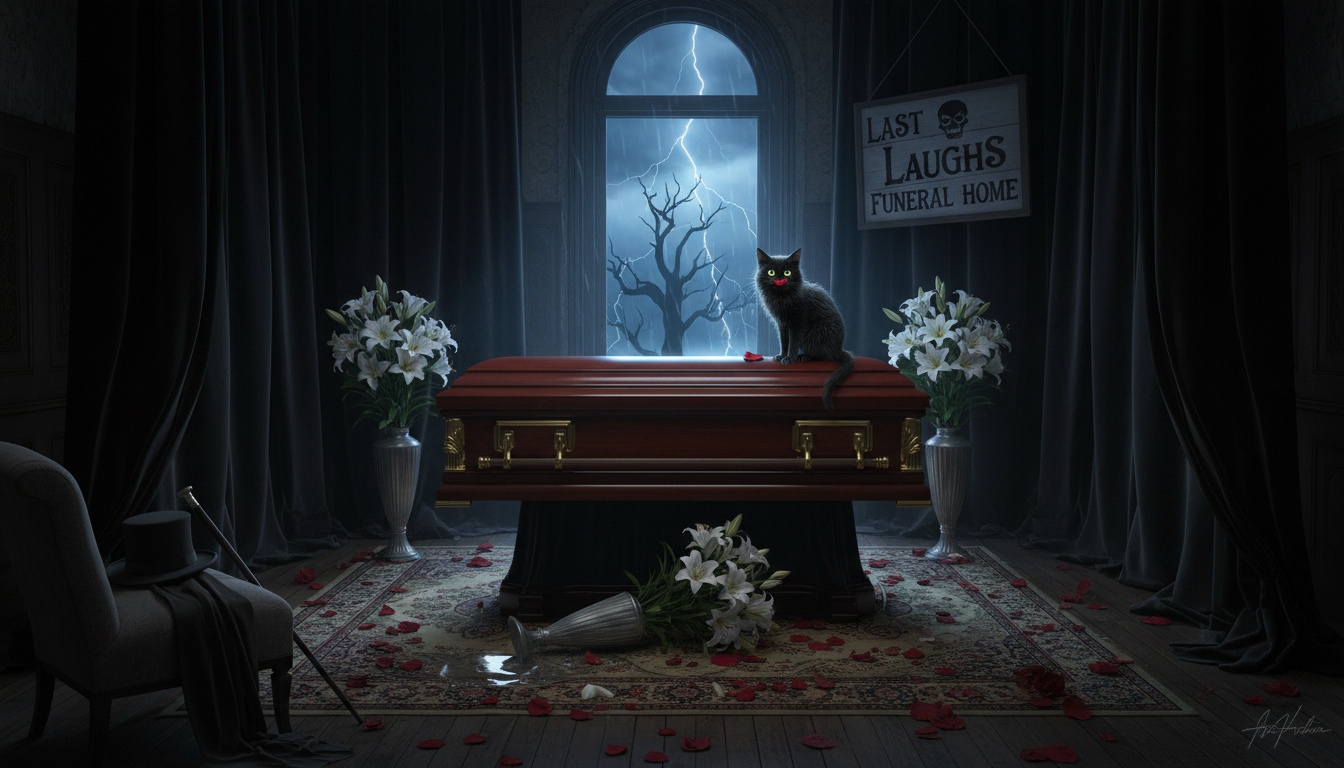
The Calamity of Grief
When Death at a Funeral arrived in cinemas through Frank Oz’s 2007 British production, it introduced audiences to a meticulously crafted farce where mortality meets absurdity. The film centers on Daniel, played by Matthew Macfadyen, whose attempts to honor his father spiral into chaos when a mysterious stranger threatens to expose family secrets. This black comedy established a template that Neil LaBute would later transplant to American soil, creating a rare instance of a Hollywood remake utilizing the identical screenplay by Dean Craig.
Grid
The British original established the framework with Matthew Macfadyen leading an ensemble cast through a day of escalating revelations. Operating on a modest $9 million budget, this version emphasized character-driven humor and maintained tighter narrative control.
The 2010 American adaptation translated these elements to Los Angeles, substituting Chris Rock and Martin Lawrence for the central sibling dynamic while retaining Peter Dinklage in his scene-stealing role as the blackmailing funeral guest.
Insights
The decision to film both versions using Dean Craig’s original script offers a unique lens for studying trans-Atlantic comedic sensibilities. While the 2007 original maintained a dry, understated wit characteristic of British cinema, the remake amplified physical comedy and broader performances. Director Frank Oz utilized the claustrophobic single-location setting to heighten tension, whereas LaBute embraced the chaos with faster pacing and expanded musical cues.
Table
| Metric | 2007 Version | 2010 Version |
|---|---|---|
| Rotten Tomatoes Score | 62% | 41% |
| Budget | $9 million | $21 million |
| Box Office | $46.6 million | $51.1 million |
| Setting | London | Los Angeles |
Details
Both productions faced distinct challenges. The original required precise timing from its theatrical ensemble, including Keeley Hawes and Andy Nyman. The remake assembled a sprawling cast featuring Tracy Morgan and James Marsden, necessitating different logistical approaches. Critics noted that the 2007 version achieved greater emotional resonance through its quieter moments, while the American interpretation emphasized star power over subtlety.
Timeline
- : The British original premieres at the Locarno Film Festival before entering wide release in the United Kingdom.
- : Screen Gems acquires remake rights, announcing the project with Chris Rock attached as star and producer.
- : The American remake opens in theaters, competing against established comedy franchises.
- : Both films achieve home media release, allowing for direct comparative viewing by audiences.
Clarity
Public confusion persists regarding the relationship between these films. The 2010 release is not a sequel but a direct remake utilizing the same script, similar to the relationship between ”La Cage aux Folles” and ”The Birdcage.” For viewers exploring funeral films, understanding this distinction proves essential, as the tone shifts significantly between British understatement and American broad humor despite identical plot points.
Analysis
The divergent receptions illuminate regional preferences in comedic storytelling. The original’s success stemmed from its ability to maintain dignity amid disaster, reflecting a particularly British stoicism. Conversely, the remake’s relative failure with critics stemmed from its substitution of pathos with slapstick, though it performed respectably at the box office. Both versions examine how death forces confrontation with uncomfortable truths, yet the 2007 film treats this theme with greater narrative cohesion.
Quotes
A surprisingly nimble disaster comedy that proves Frank Oz hasn’t lost his touch for ensemble farce.
— Rotten Tomatoes Critics Consensus
The rare remake that makes you appreciate the original while standing on its own as a competent, if broader, entertainment.
— Variety Magazine
Summary
Death at a Funeral represents a fascinating case study in how cultural context shapes identical material. The 2007 British original remains the definitive version, praised for its tight pacing and emotional authenticity, while the 2010 American adaptation serves as an accessible alternative for viewers favoring mainstream comedy. Both films ultimately succeed in their shared thesis: that mourning inevitably collides with the absurd, and dignity is often the first casualty of grief.
FAQ
Is the 2010 Death at a Funeral a remake or sequel?
The 2010 version is a direct remake of the 2007 film, utilizing the same screenplay by Dean Craig with minor adaptations for American audiences. It is not a narrative sequel.
Which cast appeared in the original British version?
The 2007 film starred Matthew Macfadyen, Keeley Hawes, Andy Nyman, Ewen Bremner, Daisy Donovan, Alan Tudyk, and Peter Dinklage.
Why do the films share identical plots?
Screenwriter Dean Craig sold the remake rights along with the original script, resulting in the rare occurrence where the same writer’s screenplay was filmed twice within three years with different casts.
Where does the remake differ most significantly?
Beyond the trans-Atlantic cast swap, the 2010 version introduces additional scenes featuring Tracy Morgan’s character and alters certain relationship dynamics, though the core narrative structure remains identical.
How did Peter Dinklage’s role change between versions?
Peter Dinklage portrayed the mysterious funeral crasher Peter in both productions, making him the only actor to appear in both the British original and American remake.
Which version is considered superior by critics?
The 2007 British original holds a significantly higher critical rating, with particular praise directed toward its tonal control and ensemble chemistry compared to the broader comedic approach of the remake.
Relaterade artiklar








Oliver Hansson bevakar musik, film, tv och kändisnyheter.